

This article picks up with toddlers (1–3 years) and focuses on active learning and safety. The main points are:
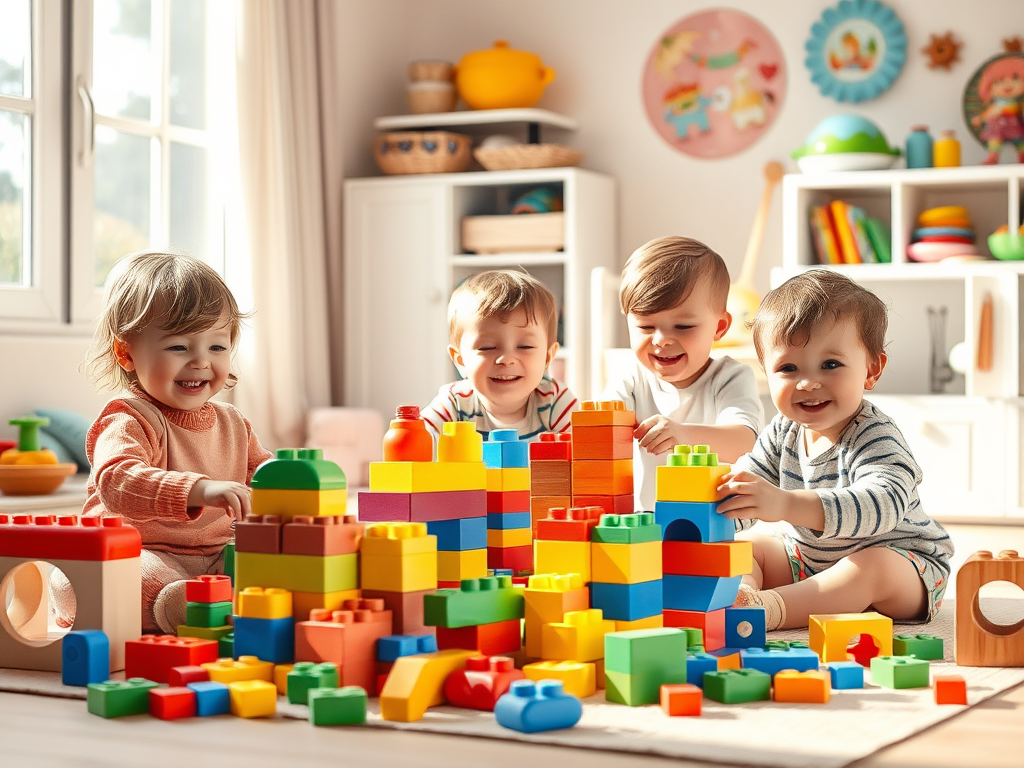
- Active, Imaginative Play: Toddlers learn by doing. Provide building toys (Duplo, wooden blocks) and simple puzzles (4–6 pieces) to practice problem-solving. Block play enhances math and spatial skills. Pretend-play sets (toy kitchen, tool bench, doctor kit, dolls) spark creativity and language. Dress-up clothes or toy cooking utensils let toddlers “play house” safely. For arts, give crayons, washable paints, and playdough – these build fine motor skills. Simple instruments (maracas, xylophone, drums) encourage rhythm and listening. Encourage daily storytime and songs; toddlers are naturally drawn to things with sound and motion, so musical toys and pop-up books are engaging.
- STEM and Everyday Learning: Turn routines into lessons. For example, count stairs or snacks with your toddler to introduce numbers. Use colored blocks to create patterns (red-blue-red…) and ask what comes next – this teaches pattern recognition. During meals, compare sizes (“Is this apple bigger or smaller than the orange?”) or count peas. In the garden or on walks, observe how plants grow or how ants move – these are simple life-science observations. Bath time can be a cause-effect lesson: pouring water, mixing soap, or watching bubbles. These activities embed early math and science in play without formal drills.
- Safety and Gear: Toddlers need protection as they explore. Always use a correctly fitted bike helmet for riding, scootering, or skating – this can reduce head injury risk by up to 88%nhtsa.gov. For roller-skating, add knee and elbow pads. In cars, continue using a car seat (or booster seat) until the seat belt fits properly: the lap belt should lie across the upper thighs and the shoulder belt across the chest. Keep toddlers in booster seats until around age 8–12 or 4’9″, and let them ride only in the back seat (which is safest).
- Water Safety & Sun Protection: When near water (pools, lakes), supervise toddlers at arm’s length. Do not rely on “floaties” or arm bands; CDC warns these can slip off and give a false sense of safety. Instead, have your child wear a properly fitting US Coast Guard-approved life jacket. For sun safety, apply a broad-spectrum sunscreen (SPF 15 or higher) to exposed skin and use a wide-brimmed hat to shade face, ears, and neck cdc.gov.
- Home Safety: Continue babyproofing measures. Keep medicines, cleaning products, and other poisons locked away out of reach. Install safety gates if there are stairs. Cover sharp furniture corners with padding, and use outlet covers on all unused plugs. Even as toddlers get bigger, vigilance is key – children can pull furniture or open cabinets if not secured.
- Growing Independence: Involve your toddler in simple chores to foster responsibility. Give them bins to sort their toys or cups to carry plastic utensils. Turn cleanup into a fun game with praise (“You did a great job putting the blocks away!”) to reinforce good habits. This not only teaches organization but also fine-tunes motor skills.
This article draws on developmental research and safety guidelines to match toys and routines to toddlers. For example, NAEYC notes that block play builds math and literacy skills. Helmets and car-seat rules are backed by research (NHTSA guidelines) nhtsa.gov, and CDC advice covers water and sun precautions. Overall, this Article is about making play active and educational while keeping the environment safe for a curious, on-the-move toddler.